What you are probably dealing with
Peak service runs on shouting
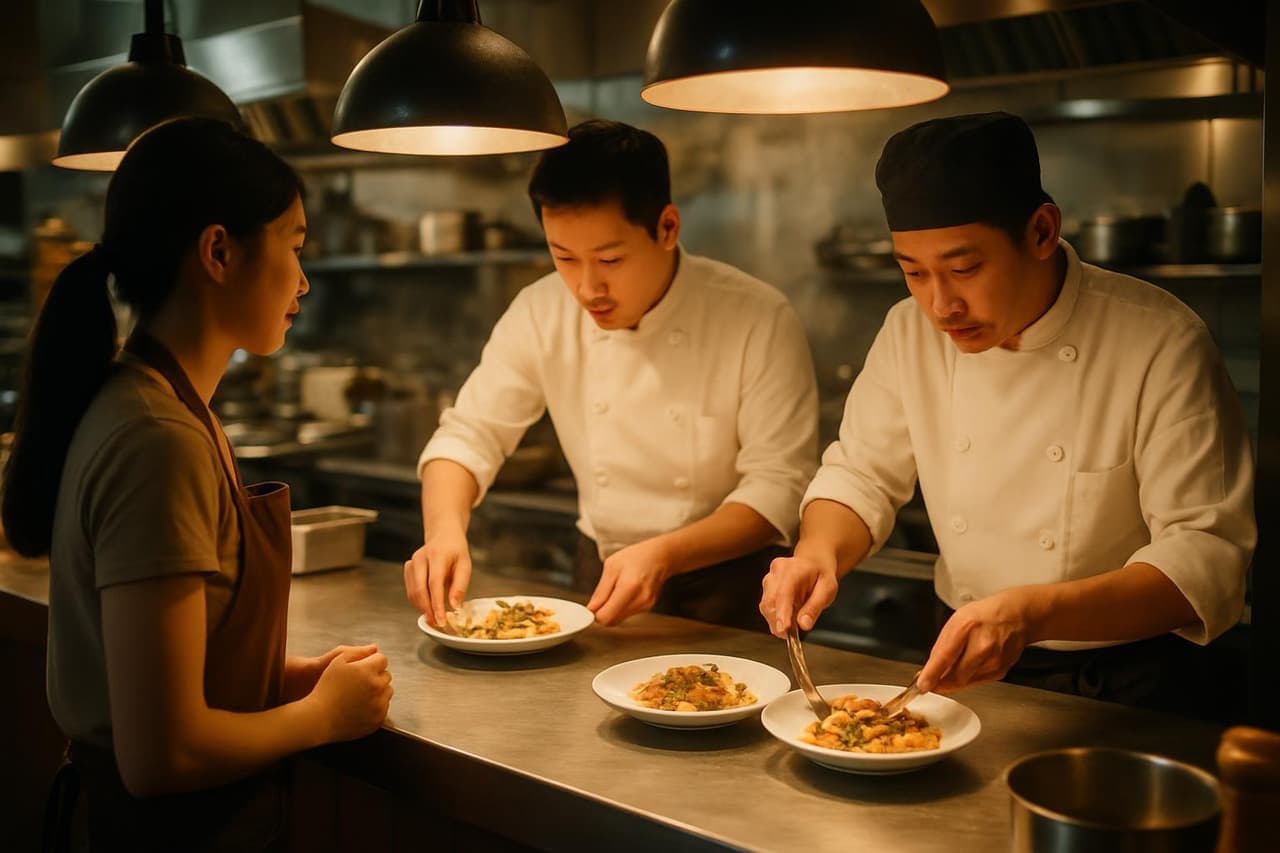
Front of house writes a ticket, walks it back and confirms verbally. When it gets busy the rail fills up, and a missed or duplicated ticket is routine — which is where the complaints come from.
Nobody knows which table has waited longest
Tickets are made in the order they were clipped up, with no notion of elapsed time. When a guest asks whether their food is coming, the only method is flicking through tickets.
Rostering is punishing
Shifts scheduled in Excel; one late call-off and the whole sheet is rebuilt, then everyone has to be messaged individually.
Ordering by instinct
Order too much and it spoils, too little and items come off the menu. With no usage or waste record, cost control comes down to the owner’s feel.
Before and after
Before
- 1Front of house writes tickets and carries them back
- 2Kitchen works the rail in clip order, confirming by shouting
- 3Front of house walks back to check whether food is up
- 4Rosters built in Excel and rebuilt on every change
- 5Ordering from impression, with no waste record
With AI GO
- 1Guests or front of house order directly in the system
- 2The kitchen board shows orders by state and items outstanding
- 3Accepted, served and cancelled states sync instantly
- 4Rosters live in the system; changes touch only who they affect
- 5Purchasing and usage recorded, so cost is visible
Modules involved
Ordering and the kitchen board go together; rostering and stock control can follow depending on site count and scale.
餐飲業 · 外場餐飲點餐系統
餐飲業對外點餐系統,包含菜單瀏覽、購物車、訂單建立與即時訂單狀態查詢。適合餐廳、咖啡廳等場景,搭配「內場訂單管理」組成完整內外場系統。
Catering餐飲業 · 內場訂單管理
內場餐點訂單看板,即時掌握各狀態訂單。支援接單、出餐、取消等狀態流轉,含待出餐品項統計視圖,搭配「外場餐飲點餐系統」組成完整內外場系統。
Catering通用 · 中小企業人資管理系統
以 AI GO 內建人資薪資表為核心的中小企業後台:組織、排班打卡、差勤簽核與一鍵薪資結算。
Operations通用 · 基礎進銷存系統
完整的雲端進銷存 ERP 系統。涵蓋商品、客戶、廠商、銷貨、進貨、退貨、庫存查詢、應收應付帳款與報表分析等核心模組。
OperationsPlatform capabilities
One order, front and back
The customer-facing ordering system and the kitchen order board share one record, so state changes — accepted, served, cancelled — are visible to both sides without anyone walking back to ask.
Outstanding items totalled
The kitchen board includes an aggregated item view: how many beef noodle soups are waiting right now, at a glance, so they can be batched instead of made one ticket at a time.
Rostering and attendance together
The HR module covers clock-ins, leave approval and rostering, so the shift changes that hurt most in food service no longer mean rebuilding a spreadsheet.
Your menu logic, not a package’s
Upsell options, set-menu combinations, time-limited items and modifier rules differ at every restaurant. No need to adopt a packaged POS’s field design.
Labour cost you can recover
For a single site trading ten hours a day with five staff at an average loaded rate of NT$220/hour:
Carrying tickets and verbal confirmation
Communication overhead at peak
- Hours / month
- 50 hrs
- Hourly rate
- NT$ 200
- Recovered / month
- NT$ 10,000
Checking order status and handling complaints
- Hours / month
- 22 hrs
- Hourly rate
- NT$ 220
- Recovered / month
- NT$ 4,840
Building rosters and notifying changes
- Hours / month
- 18 hrs
- Hourly rate
- NT$ 300
- Recovered / month
- NT$ 5,400
Ordering, stocktaking and costing
- Hours / month
- 20 hrs
- Hourly rate
- NT$ 300
- Recovered / month
- NT$ 6,000
| Work replaced | Hours / month | Hourly rate | Recovered / month |
|---|---|---|---|
| Carrying tickets and verbal confirmationCommunication overhead at peak | 50 hrs | NT$ 200 | NT$ 10,000 |
| Checking order status and handling complaints | 22 hrs | NT$ 220 | NT$ 4,840 |
| Building rosters and notifying changes | 18 hrs | NT$ 300 | NT$ 5,400 |
| Ordering, stocktaking and costing | 20 hrs | NT$ 300 | NT$ 6,000 |
| Total | NT$ 26,240 | ||
These figures assume a typical staffing profile. Real numbers depend on your team size and process — we rerun the model with your own data during a consult.
FAQ
We already have a POS. Do we replace it?
What if the system goes down at peak?
Our staff are older. Can they learn it?
Can we manage multiple sites?
Further reading
連鎖品牌如何用 AI 統一管理多門市?台灣實戰案例解析
連鎖餐飲、零售、服務業主管必看:AI 如何解決總部與門市資訊落差、讓督導省去 80% 巡店時間?本文拆解台灣連鎖品牌 AI 管理實戰。
流程自動化AI 報價單自動化:讓業務告別手動填表,報價速度快 10 倍
台灣中小企業業務每天花 2~3 小時手動填寫報價單,AI 報價單自動化可將這個流程縮短到 5 分鐘內完成。本文說明實作方式、常見工具比較與真實案例。
流程自動化企業流程自動化完全指南:AI 如何幫你省下 50% 的行政時間
從請假審核、報表匯整到客戶跟進,AI 流程自動化能幫企業節省大量重複性工作。本文整理 6 大常見自動化場景與實作建議。
Other solutions
Want to see this run on your own process?
Leave your details and an FDE will walk it through with your data.